Why Booksy Won't Build Your Brand — and What It's Costing You
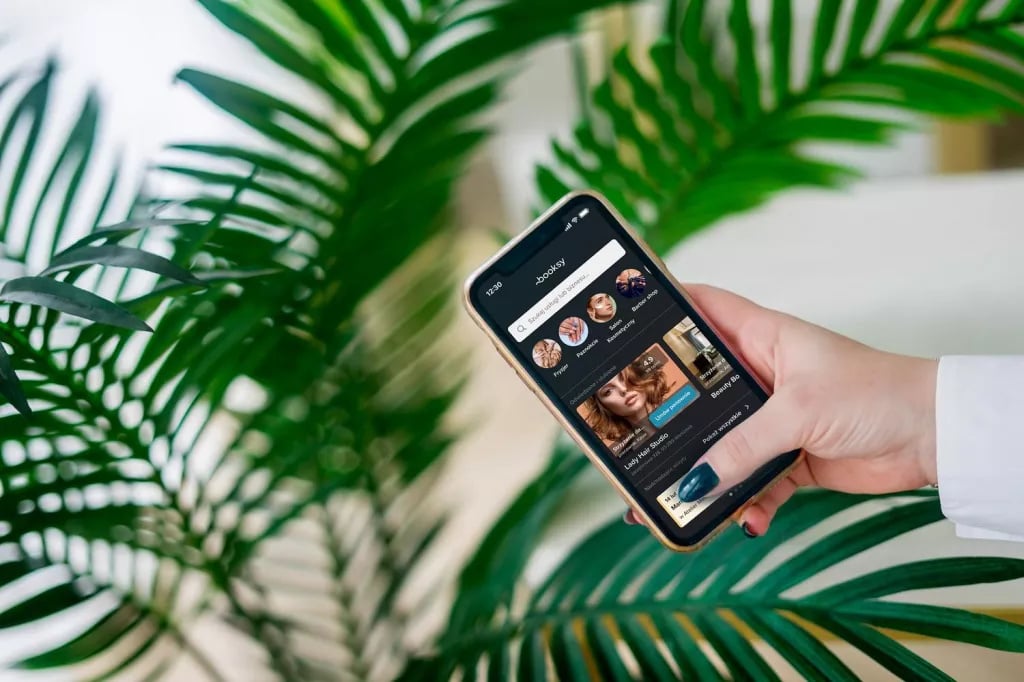
Booksy treats everyone the same. A multiple World Champion and a stylist opening her first salon look identical on it — a few photos, a description, a "Book now" button. In that system, the only tool you have to compete for clients is price. This article explains why brand is a financial tool — and what your own website gives you that no platform can ever replace.

A few weeks ago I came across the profile of one of the best nail technicians in Poland. Multiple Polish, European and World Champion. A certified trainer for a prestigious brand. She trains nail techs across Europe. Her work has won at major competitions in Munich, Geneva and London.
On Booksy? She looks like every other salon. A few photos, a rating, a price list, a "Book now" button. If you didn't know who she was, you'd have no reason to choose her salon over the one round the corner doing the same thing for £20 less.
This isn't a criticism of Booksy. It's a diagnosis of something deeper — and a starting point for a conversation about what brand actually is and why it has such a direct effect on money.
What Booksy does — and why it works (an honest admission)
Before I say what Booksy does wrong, let me say what it does well — because it does it very well.
Booksy solves one specific problem: it connects clients looking for a service with salons that offer it. It works like a search engine with a calendar — a client types "manicure London", sees a list of nearby salons, picks a slot, pays. No phone calls, no waiting for a reply, full convenience 24/7. For a new salon building a client base from scratch — it's a great tool for getting those first bookings.
The commission model is fair: Booksy Boost takes 45% from the first visit of a client acquired via the marketplace (on an open-ended contract), and zero commission from the second visit onwards. You pay for acquisition, not retention. That's logical and transparent.
The problem isn't the commission structure. The problem is what Booksy does to your brand — or rather, what it can't do.
What is the commodity trap — and how do salons fall into it?
In economics there's a concept called the "commodity trap". You fall into it when your service or product is perceived by clients as identical to the competition — comparable only on price. When that happens, the only winning strategy is cutting your price. And that's the trap, because there's no good way out — someone will always be able to do the same thing cheaper.
Booking platforms — by their very design — encourage the commodity trap. Their interface is built to make it easy for a client to compare and choose. Sorting by price, distance and stars. A grid of salon cards that all look similar. A few photos, a text description limited to the minimum, a rating and a book button. The same mechanism applies to hairdressers, barbers, massage therapists — anyone operating on a platform where clients sort by price and distance before they've had a chance to feel any difference between one offer and another.
In that system you have no tools to stand out in a way that justifies a higher price. You can write in your description that you've won a world championship — but that text lands in the same template as a salon that opened last month, run by someone just starting out. The client scans with their eyes, stops at the price and the stars. The story disappears before it's had a chance to land.
Why brand is a financial tool — and why its importance is growing
The word "branding" tends to be treated as something abstract — the domain of large companies with budgets for agencies and campaigns. That's a misunderstanding, and it costs small businesses very real money.
Branding is everything that means a client, before they even call, before they ask about the price, before they step through the door — already knows they're in the right place. It's the hero image on your website that says "artists work here, not just technicians". It's the founder's story told in a way that makes the client feel they understand this person and their approach to the work. It's a gallery that shows not just "what we do" but "how we think about nails". It's certificates and awards presented with the context that explains why they matter. It's consistency — the same colours, the same language, the same feel on your website, Instagram and in the physical salon.
Each of these elements is a signal. And signals build perceived value — and perceived value directly translates to how much a client is willing to pay without asking why it's so expensive.
The evidence for this is hard. Lucidpress — an analytics platform studying the impact of brand consistency on financial results — gathered data from hundreds of companies of all sizes and found that consistent brand presentation across all communication channels can increase revenue by up to 23% — not by spending more on advertising, but through higher perceived value from clients who are willing to pay more before they've even asked about the price.
And this isn't only a trend among large companies. Searches for "brand strategy" grew by 36% between 2021 and 2026. The number of enrolments in branding courses on LinkedIn Learning — a platform used by business owners — grew by 42% in the same period. Awareness is growing. Salon owners increasingly understand that a logo isn't a brand — it's just one element of it.
According to McKinsey research, 89% of companies prioritise brand differentiation — standing out — as their main strategy for retaining clients in a competitive environment. Not cutting prices. Differentiation. Because that's the only strategy that doesn't destroy your margins.
Awareness is growing — and not only in corporations. Beauty salon owners increasingly talk about "their brand", their "style", wanting things to look "consistent". That's a good instinct. The problem is that most stop at a logo and some colours on Instagram — with nowhere for that brand to live fully. That place is your own website.
What does a client see when they search for you — Booksy vs your own website?
Let's compare two scenarios. A client is looking for a nail salon. She finds Booksy and your own website. What does she see in each place?
The difference isn't technical. It's narrative. On your own website the client enters your world — from the first pixel. On Booksy she enters the platform's world, where you're one entry in a grid.
What are your awards worth if nobody can see them?
That same stylist from the start of this article — World Champion, certified trainer, titles from Munich, Geneva and London — has one paragraph of description on Booksy. Next to salons with no achievements at all, in the same template, the same font. A client scanning the results sees stars and a price. The story disappears before it has a chance to land.
On your own website, those same achievements look completely different. A hero section with the headline "Multiple World NailArt 3D Champion" — visible immediately, without scrolling. A dedicated section listing awards and certificates — World Cup Munich 2017, European Masters' Award 2019, Nailympion Geneva 2018. Each title with context, explaining what it means in the industry. A gallery of competition work presented as a lookbook, not a grid of phone photos.
Same studio. Same person. Same titles. But a completely different story told to the client — and a completely different price she's prepared to pay before she even asks.
The research on premium pricing is clear: to justify higher prices, you need evidence of quality that a client can see and assess. Awards, certificates, industry press features, client testimonials — these are the evidence. But they only work when presented with appropriate weight. On a platform that weight disappears. On your own website you can build it.
How Instagram fits into this picture — and why it doesn't replace a website
Instagram is today primarily a discovery channel for beauty salons — and it's genuinely good at it. A new client sees your reels, photos, stories. She gets interested. She clicks the link in your bio.
And at that moment she either lands on Booksy — where she falls into the grid with your competitors — or she lands on your own website, where she enters your world.
That's the crucial moment. And most salons waste it.
Then there's the reach problem. In 2024 the average brand post on Instagram reached around 4% of followers — and that figure is falling steadily. You have 2,000 followers? Your post is seen by about 80 people. Instagram is a discovery channel, but an increasingly inefficient one for maintaining relationships.
More importantly — Instagram gives you no client data. Their email addresses, phone numbers, visit history — you don't have any of it. You can only reach them through Meta's algorithm. If the platform changes its rules tomorrow, reach drops to 1%, or your account gets suspended — you lose the entire communication channel with nothing to fall back on.
Research by Adssential Marketing (2024) shows that 45% of clients discover a salon through social media. But discovery is only the beginning — because the same research shows something that shifts the whole perspective on Instagram as a business tool:
Instagram is the discovery point. Your website is the decision point. These are two different moments in a client's journey — and they require two different tools. Without a website you lose most of the clients that Instagram brought to you — because you have no place where they can make their final booking decision.
What does your own website give you that Booksy and Instagram never will?
Three things that are unavailable on any platform.
Control over your narrative — the brand you build, not the template you're given
Booksy gives everyone the same template. The same page layout, the same price list format, the same description fields. Your brand has to fit inside the platform's rules — not the other way round.
Your own website inverts that logic. You decide what you open the conversation with — your story, your awards, your philosophy, your portfolio. You decide what language you use to describe your services — whether it sounds like "a salon for everyone" or "a studio for those who know what they want". You decide whether the client sees the price list first, or first understands why that price list is what it is.
That's the difference between being the author of your brand and being a tenant in someone else's system.
Your own client database — capital that stays with you
Your own website with a booking system means your own client base — their contact details, visit history, preferences, allergies, notes. That's capital that no platform will ever give back to you. With your own database you can send an SMS reminder before an appointment, an email with a birthday offer, a notification about a new seasonal collection. You can build a relationship outside the app, on your own terms, through channels you control.
And this isn't theory — it's a measurable difference. Research on loyalty programmes in beauty salons shows that automated SMS reminders reduce no-shows by 28% and increase the frequency of returning clients. Implementing a 24/7 booking system with automatic confirmation increases out-of-hours bookings by 37%. Booksy has these tools — but on a platform, the data and the relationships you build belong to the platform. Your own system builds the same thing — but for you alone.
A CRM that knows your client — not just their appointment time
The best salon websites today have a built-in client management panel that goes far beyond a simple calendar. Imagine a system that shows: Anna Williams — client since March 2023, 8 visits, average every 28 days, LTV £380, prefers French hybrid, likes quiet during treatments, nut allergy, wants to try baby boomer ombré at her next visit.
That's the key difference between Booksy and your own system: on Booksy, your client data formally belongs to the platform. Your own CRM integrated with your website is a database that's yours — regardless of what commissions the platform introduces next year, whether it changes its terms, or whether it even maintains its market position a decade from now.
How the same stylist looks on Booksy — and how she looks on her own website
Now imagine the same stylist on her own website. The first thing a client sees is the headline "Multiple World NailArt 3D Champion" — not buried in a description, but as the main hero message. An awards section laid out across specific competitions and years. Stylist profiles treated like artists, not employees — each with their own portfolio and specialisation. A gallery that looks like a lookbook, not a grid of phone photos. A price list that doesn't apologise for its prices — because it's surrounded by context that justifies them. And the same booking system as Booksy — but the client books in an environment she associates exclusively with this one studio.
A client who finds that website doesn't ask "why is it more expensive here". She asks "do they have a free slot next week".
Who needs their own website — and where to start?
Your own website isn't the right solution for every salon at every stage of its development. But the barrier to entry is lower than most owners think.
A simple presence site with a gallery, a stylist profile and a contact form — without an online booking system or CRM — costs around £500–700. That's the starting point: a place where your brand can live, where an Instagram client has somewhere to land, where your story and style are told in your own voice rather than a platform's template.
A site with an online booking system, a calendar and a basic client panel sits in the £900–1,200 range. A site with a full CRM, automated SMS reminders, stylist profiles and an analytics dashboard starts from around £1,300 upwards.
Your own website makes sense if you tick even one of these boxes — you don't need to tick all of them. And whether you run a nail salon, a massage studio, a barbershop or an aesthetics clinic — the principle is the same: brand is where a client makes their price decision before they ask about the price.
- You want to build a brand from the start — not just collect bookings
- You have achievements, certificates or a story that has nowhere to be properly told
- You run an active Instagram and want to direct that traffic to yourself, not to Booksy
- You employ stylists and want to showcase their individual character and portfolio
- You're thinking about raising your prices — and need a place that justifies that decision
- You want to own your client data and build relationships with them outside the platform
Booksy and your own website aren't mutually exclusive. The best model is one where the platform brings in new clients from the marketplace — and your website keeps them, builds the relationship, and positions you as a brand worth being loyal to. The platform acquires. The brand retains.
FAQ
Does a beauty salon need its own website if it already has Booksy?
It depends on your business goal. If the goal is purely managing bookings — Booksy is enough. If the goal is building a brand, standing out, premium pricing and long-term independence from a platform's algorithm — your own website is essential. Booksy treats everyone the same: it sorts by price, ratings and distance. There's no room in it for the story, personality and achievements that justify a higher price.
What does branding mean for a small beauty salon?
Branding isn't a logo and some colours — it's a set of signals that tell a client: you're in the right place, this person is worth their price, I want to come back. In practice it's a consistent visual identity, the founder's story, a portfolio gallery, reviews, certificates and achievements — all of it together builds a position in the client's mind before they even walk through the door. Research by Lucidpress shows that consistent brand presentation can increase revenue by up to 23%.
How does your own website help you earn more in a salon?
Your own website lets you control the narrative: showcase achievements, build a premium position, display your portfolio in a way that's impossible on a booking platform. A salon that communicates "we're a studio run by a multiple World Champion" can justify higher prices than one that's just another entry in the Booksy grid. On top of that, your own site with a CRM builds a client database — visit history, preferences, allergies — enabling relationship marketing that no platform can offer.
Does Instagram replace a website for a salon?
No. Instagram is a discovery channel — a client finds your photos and gets interested. But 67% of clients look for an official website before making their final booking decision. Without a website, you lose the clients that Instagram brought you. On top of that, average organic reach on Instagram today is around 4% of followers per post — and it's falling steadily. Source: Adssential Marketing 2024, Hootsuite / Sandyriev 2025.
What is the commodity trap and how does it affect beauty salons?
The commodity trap is the situation where your service is perceived as interchangeable with competitors' — comparable only on price. Booking platforms by their very design encourage this effect: they present salons in a grid sorted by price, ratings and distance. In that system, the only tool you have to compete for a client is cutting your price. Brand — story, achievements, personality, consistent identity — gets you out of the commodity trap and lets you compete on value, not price.
Sources
- 23% — revenue increase with consistent brand presentation across all channels. Source: Lucidpress, cited by Lueur Externe 2023
- +36% — growth in searches for "brand strategy" 2021–2026. Source: Google Trends / IndiblogHub 2026
- +42% — growth in branding course enrolments on LinkedIn Learning 2020–2026. Source: IndiblogHub / LinkedIn Learning 2026
- 89% — companies prioritising brand differentiation as a client retention strategy. Source: McKinsey, cited by Growe Consulting 2025
- 80% — increase in brand recognition through consistent use of colour. Source: Loyola University Maryland, cited by Colorcom and Color Institute, 2022
- 7 seconds — time in which a first impression of a company forms. Source: Natsumi Nishizumi, "Branding statistics for small business owners" 2024
- 4% — average organic reach of a brand post on Instagram in 2024. Source: Hootsuite, Sandyriev 2025
- 67% — clients looking for an official website before making a booking decision. Source: Adssential Marketing 2024
- 45% — clients discovering a salon through social media. Source: Adssential Marketing 2024
- 28% — reduction in no-shows through automated SMS reminders. Source: Adssential Marketing 2024
- 37% — increase in bookings outside opening hours after implementing an online 24/7 system. Source: Adssential Marketing 2024
- 310,000 — beauty professionals on Booksy globally. Source: Pabau / UK salon software review 2026
Chris Rocket
Brand strategy and web design for businesses in the UK and Poland. 15 years of experience building brands and websites that generate real results — not just look good.
Want to see what your salon could look like as a brand?
I design websites for beauty salons that communicate value, not just a price list. With a booking system, stylist profiles and a CRM that builds long-term client relationships. The brief takes 10 minutes, the consultation is free.