Is Your Website Invisible to AI? How to Appear in ChatGPT, Claude and Perplexity Results in 2026
AI Search is changing the rules. Only 38% of Google AI Overview citations now come from the top 10 organic search results. You could rank first on Google and not exist for ChatGPT. This article is a practical guide to GEO (Generative Engine Optimization) — how to build visibility in AI: on-page and off-page tactics, schema markup, measuring results and a step-by-step action plan.
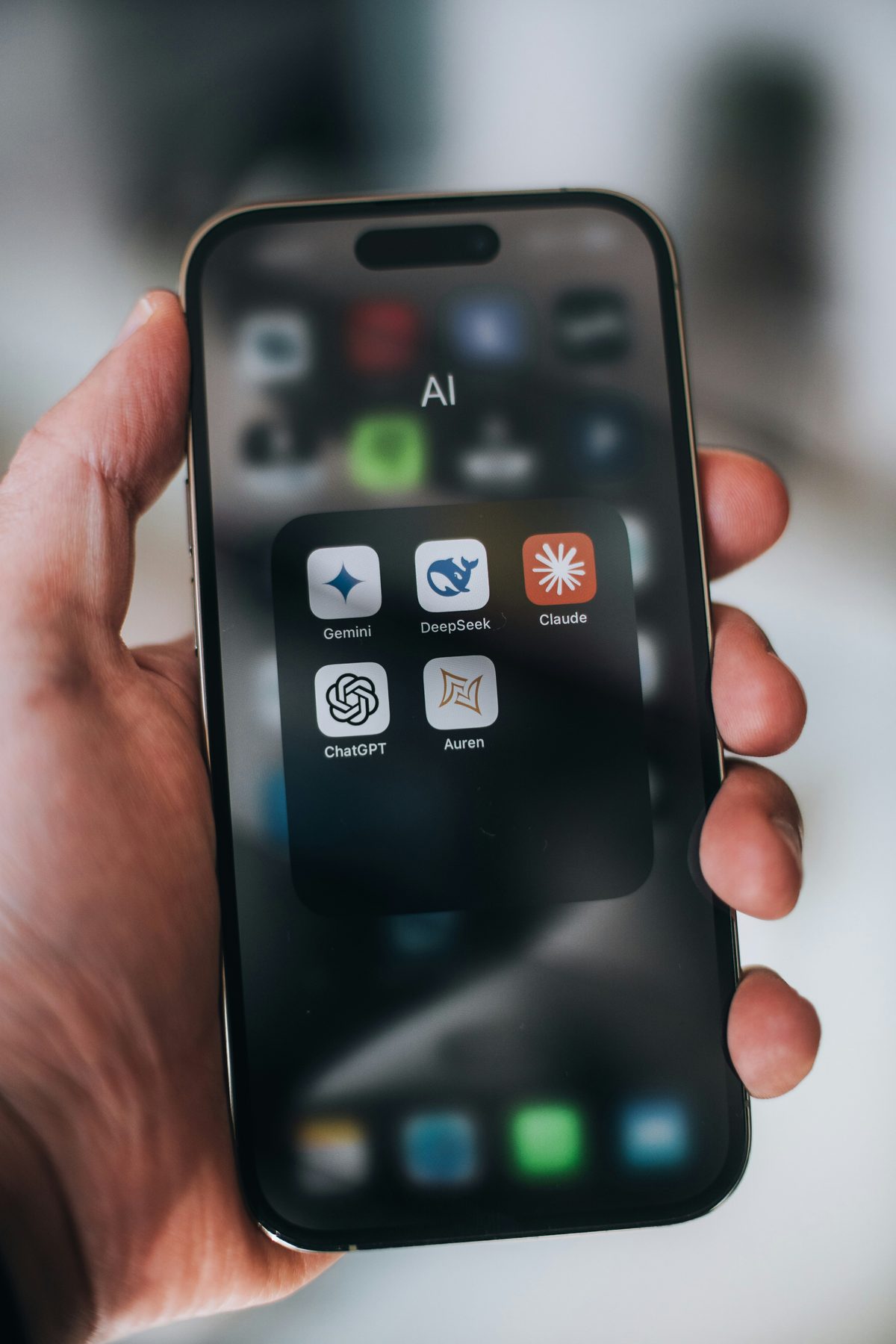

It starts innocuously. Someone types into ChatGPT: "recommend a good nail salon in central London". Or: "where in the Cotswolds can I rent a cosy cottage for two?" Or simply: "a good car mechanic in Manchester — do you know anyone?"
ChatGPT responds. It names specific businesses, gives addresses, links to websites. Someone clicks. Someone calls. Someone books.
Your business isn't among those mentioned. Not because you're worse. Because AI doesn't know about you — or knows about you but doesn't trust you enough to cite you.
This is a new problem. And very few businesses are even aware of it yet. This article explains what it is and what to do about it.
What is GEO — and why it's not just another SEO?
GEO — Generative Engine Optimization — is the optimisation of content and site authority to be cited by AI models: ChatGPT, Claude, Perplexity, Google AI Overviews, Microsoft Copilot.
It sounds similar to SEO. But the mechanism is fundamentally different.
Traditional SEO is about getting your site to rank high in search results. Google crawls pages, analyses links, keywords and load times — then decides where to show you. The user sees a list of results and clicks what they want.
GEO works differently. Language models don't show a list of results. They answer. They write a few sentences, give specific advice, name specific businesses. Either they cite you — or they don't. Either you're in that answer — or you're not.
The difference is fundamental:
| Traditional SEO | GEO | |
|---|---|---|
| Goal | High position in SERP | Being cited in an AI response |
| Mechanism | Rankings, links, keywords | Topical authority, structure, trust |
| User outcome | A list of links | A ready-made answer |
| Your visibility | One link among many | Named by name — or ignored |
| Measurability | Positions, clicks, CTR | Citations, share of AI responses |
Ahrefs' latest analysis revealed something alarming: only 38% of sources cited by Google AI Overviews are pages from the top 10 search results. Six months earlier that figure was 76%. AI is becoming increasingly independent from traditional rankings. You can be first on Google and not exist for AI.
This is the new landscape. And right now, in 2026, there is a window to position yourself well within it.
Why is 2026 the critical year for AI visibility?
Gartner predicts that by the end of 2026, traditional search engines will lose roughly 25% of their traffic to AI. Not in five years' time. Now.
An even more striking figure: according to eMarketer and Gartner forecasts, by 2028–2030 AI will handle more than half of all global searches. Some analysts put the crossover point as early as 2027.
What does this mean in practice? Your potential clients — those looking for a hairdresser for a special occasion, a good baker for a wedding cake, or a place for a weekend away — are increasingly not opening Google. They ask AI models.
In the UK this trend is already well underway. English-language GEO content is extensive; the race to be cited is already competitive. But within niche and local markets there is still significant open space. Businesses that build AI authority now will have an advantage that won't be easy to close later.
How do AI models decide who to cite?
AI models cite sources based on three main signals. You need all three — missing one weakens the rest:
- The authority of the content creator. Is the author recognised in their field? AI doesn't only look at your site — it builds a picture of your credibility from many independent sources: citations in trade media, mentions on local portals, client reviews on Google and industry platforms (Booking.com, Tripadvisor, Treatwell, Doctify), social media profiles. The more places that confirm your expertise with consistent descriptions, the stronger the signal.
- The structure and quality of the content itself. Is the passage AI might insert into a response clear, data-backed and easy to extract from context? Modular paragraphs, specific numbers with dates, cited external sources, headings in the form of questions — all of these feed into the assessment of "worth citing vs not worth citing".
- Frequency of updates. AI models — like social media algorithms — favour content that is alive, with things happening on it. Active profiles have higher visibility than dormant ones. This isn't "add a full stop once a year and change the date" — it's genuine refreshing: new data, new examples, context from recent months.
Selection works in two stages — first an assessment of domain and author credibility, then an assessment of the specific passage in terms of its usefulness for answering a query. Each of these three signals is expanded further in this article — with concrete implementation tactics.
Today all major AI models have access to real-time search mode. This means that content recency has a direct impact on whether you get cited.
What is E-E-A-T — and why does AI apply it?
Google has for years talked about E-E-A-T: Experience, Expertise, Authoritativeness, Trustworthiness. This isn't only a ranking signal. It is a framework that AI models apply to assess whether a given site is worth citing.
Experience means you write about things you have actually done — from your own practice, your own observations, your own client encounters. A salon owner who writes "over 8 years serving more than 2,000 clients I've learnt what women really look for in a gel manicure" — has E-E-A-T, because she brings knowledge that exists nowhere else. Text that only summarises generally available information — paraphrasing Wikipedia or other blogs — lacks E-E-A-T, because it adds nothing original. AI sees this and doesn't cite it, because it could just as well cite the original.
Expertise means depth. AI doesn't cite superficial content. It cites sources that show the author genuinely understands the topic — uses the right terminology, cites data, doesn't oversimplify.
Authoritativeness means others cite you. If other sites link to you, if media mention your brand, if your content gets shared — AI sees this as a signal that you're worth trusting.
Trustworthiness means your information is verifiable. Dates, sources, specific data — not generalities.
What actually increases the chance of being cited by AI?
Researchers at Princeton and Georgia Tech conducted a landmark study of 10,000 queries. They tested nine content optimisation strategies and measured the increase in AI citations.
The results were unequivocal: adding statistics and numerical data is one of the strongest factors — it increases the probability of citation by up to 40%. Adding quotes and external sources had a similarly strong effect. Further down the list: credibility of tone, text fluency, ease of comprehension.
What didn't work? Keyword stuffing. Headlines packed with keywords. Formatting for its own sake.
The conclusion: AI rewards content that looks like a well-sourced expert answer — because that's exactly what helps it give users a well-sourced answer.
Why do AI citations fade after 5–6 days?
This little-known fact changes the entire content strategy. According to data from Indexly and Seer Interactive, citations in Perplexity and similar systems fade after 5–6 days for content that hasn't been updated. AI-cited content has 2–3 times higher churn risk than traditional SEO positions.
What does this mean? You can't write an article once and forget about it. GEO requires a content refresh programme — regular updates, new data, new examples. Sites that systematically update their most important articles have dramatically higher citation rates than those that do nothing after publishing.
On-page tactics: what exactly should you change on your site?
What to put in the first 40–60 words after a heading?
This is the most important structural principle. AI looks for content it can lift and insert into a response without editing — so-called snippetable content. If you ask a question in a heading, answer it literally in the first two sentences. Don't build suspense, don't save the answer for the end of the paragraph.
Instead of:
"Choosing a good boutique hotel is a topic many travellers approach emotionally. There are different approaches, different criteria, different opinions…"
Write:
"A good boutique hotel in the countryside differs from a chain hotel in three ways: personalised service, a unique sense of place, and the absence of anonymity. The guest knows the owner — and the owner knows the guest."
The first version can't be cited. The second one can.
Why should headings be questions?
Instead of: "Our Spa Treatment Menu"
Write: "What spa treatments are available and how much do they cost?"
Instead of: "The Story of Our Bakery"
Write: "What makes our bakery different from others in the city?"
Language models are optimised for a question–answer format. A heading that is a question naturally signals that the answer follows — and AI understands this. Notice that all the main headings in this article are questions — that's not an accident.
How do you write paragraphs that AI can extract?
Each paragraph should be complete in itself — lifted out of context, it still makes sense. This isn't a literary requirement, it's a technical one: AI pulls fragments, it doesn't copy whole pages. If your paragraph requires the one before it to be understood — it won't get cited.
Why does an FAQ section increase citations?
An FAQ section at the end of an article or service page isn't just good UX — it's a direct citation magnet. Question–answer formats are the easiest for AI to process, because they perfectly match the structure of "user asks a question → AI responds".
Technical implementation: add a FAQPage schema in JSON-LD.
A brief note on what this actually is — because I'll return to it throughout the article. Schema markup is data invisible to users, written into your page's code — a few blocks in the <head> section — that tells search engines and AI models "what exactly is here": questions and answers, an article with an author, a local business at address X. JSON-LD is the format in which this data is written. Implementation doesn't require rebuilding your site — just adding a few lines of code.
Pages with FAQPage schema statistically have higher citation rates than those without it — because AI gets ready-made "question → answer" pairs it can insert into its response without editing.
Where and how do you add it?
The entire block of code below (including the opening <script type="application/ld+json"> and closing </script>) is pasted once, in the <head> section of the specific page where you have FAQ content — e.g. in index.html, services.html, an individual blog post. You don't repeat it across your whole site — only where there is actually a visible Q&A section for the user.
In practice, implementation looks like this depending on your technology:
- WordPress — the Yoast SEO or Rank Math plugins do this automatically once you enable "add FAQ schema" in the page/post editor. You don't type it yourself.
- Static HTML / Next.js / Astro / Webflow — a developer pastes the
<script>block manually into the page template, usually just before the closing</head>tag. - Shopify / Squarespace — in the admin panel there is a "Custom Code" / "Code Injection" section for pasting blocks into the page header.
A minimal, ready-to-paste FAQPage implementation:
<script type="application/ld+json">
{
  "@context": "https://schema.org",
  "@type": "FAQPage",
  "mainEntity": [
    {
      "@type": "Question",
      "name": "How do I book a cottage for the weekend?",
      "acceptedAnswer": {
        "@type": "Answer",
        "text": "Bookings can be made via the form on the site or by phone. Confirmation arrives within 2 hours."
      }
    }
  ]
}
</script>
What this code does: it declares to search engines and AI models that this page has a Q&A section. Each question–answer pair is recognised as ready material for a response in ChatGPT, Claude or Google AI Overviews. The block itself is invisible to users — it works "under the bonnet" of the page.
What data is worth adding to content?
Instead of: "most of our guests come back again"
Write: "78% of our guests rebook within 12 months — data from our booking system for 2025."
Instead of: "our treatments are high quality"
Write: "We use only Gelish and OPI products — brands with dermatological safety certifications."
Specific numbers and details are what AI cites. Generalities — it doesn't. The Princeton study confirmed this numerically: statistics alone increase citations by up to 40%.
How do you cite sources so AI sees them?
"According to a Booking.com report from 2025…"
"Research from Mintel indicates that…"
"ONS data for 2024 shows…"
This pattern sounds like academic writing — and that's exactly why it works. AI is trained on academic and encyclopaedic texts. Content that follows the same pattern sounds to it like a credible source.
When to use tables and lists instead of prose?
Structured data in tables and lists is exceptionally easy for AI models to extract. If you're comparing pricing packages, service bundles, availability windows — do it in a table, not in prose. If you're listing booking steps — number them.
According to data from Knownful and madx.digital, two formats account for roughly a third of AI citations in commercial queries: comparison articles (e.g. "Gel nails vs. acrylics — which to choose?") and "Top X" round-ups (e.g. "5 best boutique hotels in the Lake District"). When a user asks AI to compare options or searches for "top something" in a category — AI reaches for exactly these articles.
What content formats does AI cite most readily?
From the Princeton/Georgia Tech study and analyses by Knownful and madx.digital, the following hierarchy of formats emerges — from most to least frequently cited:
Original data and own research — why this is the strongest format
If you are the source of the data — you're irreplaceable. AI builds responses on facts, and facts need a source. Your own data has no competition.
You don't need to conduct academic research. "I analysed bookings from 120 holiday cottages in the Peak District over the 2024–2025 season and here's what I found: 67% of guests book on a Friday or Saturday morning, 81% check reviews before booking, and only 23% compare more than two options" — that's original data. It exists nowhere else. AI cites it because it has to.
Definitions and mini industry glossaries
Definitional questions — "what is a gel manicure?", "what's the difference between a bed and breakfast and a boutique hotel?", "what does an organic certification mean in cosmetics?" — make up a huge portion of the queries directed to AI. Sites with short, precise definitions on authoritative domains are regularly cited for exactly these answers.
If you run a service business, it's worth considering a mini glossary of industry terms — short, clear definitions of terminology you use in client communication (on your site, in price lists, in proposals). Not as additional content for its own sake — as a citation infrastructure on which AI builds responses in your category.
Comparison articles (X vs Y) and round-ups ("Top 5", "best X")
Two related formats that AI cites with particular eagerness:
- Comparisons (X vs Y) — e.g. "Gel nails vs. acrylics — which is better?", "Boutique hotel vs. Airbnb in Edinburgh — a cost and comfort comparison". The reader needs to decide between two options, and AI gets a ready-made response structure.
- Round-ups ("Top 5", "best X in Y") — e.g. "5 things that separate a good bakery from an average one", "3 spa hotels in the Cotswolds for couples seeking peace and quiet". The reader wants a short ready-made shortlist, and AI can answer directly with that list.
When someone asks AI to compare options or for a "top X" — the model reaches for exactly these formats.
Step-by-step guides
Structured guides with numbered steps and clear sub-headings are easy for AI to extract. It can lift "Step 1: X, Step 2: Y, Step 3: Z" and give the user a ready-made instruction. The better the structure, the higher the probability of citation.
FAQ — the format closest to a conversation with AI
The format that best mirrors the nature of interaction with a language model. FAQPage schema plus real questions and answers is one of the most cost-effective GEO elements — and one of the easiest to implement on an existing site.
Off-page tactics: how to build authority that AI can see?
How does AI know you're credible?
The strongest authority signal — for Google and for AI — is being cited by others. When other sites, blogs and media link to your content and mention you by name, AI treats you as an established source in your field.
How do you achieve this? Guest articles in trade media. Expert commentary — if a journalist is writing about trends in wellness and needs someone who runs a boutique spa in the Cotswolds, be that person. Your own data and research that others want to cite. That's precisely why original research is so valuable — it generates citations organically.
How do unlinked brand mentions work?
AI indexes text, not just links. A mention of "Bella Vista Nail Studio in Manchester, specialists in Japanese manicure since 2018" on a trade portal is an authority signal even without a clickable link back to your site.
Strategy: build a presence where media and bloggers write about your industry. Comment, contribute, respond. You don't need to be everywhere — you need to be present where the content is created that AI reads.
Why is online identity consistency a signal for AI?
AI cross-references information from different sources. If your website says you specialise in outdoor weddings, your Instagram shows mostly christenings and corporate events, and your Google Business Profile says "general catering" — AI has trouble classifying your expertise clearly.
Consistent communication across all channels isn't just branding — it's a signal to AI that you know who you are and what you're good at.
How do you reach AI across multiple channels simultaneously?
AI triangulates information from multiple sources. If only your own site talks about you — AI is cautious. If your site, your industry profile (Booking.com, Tripadvisor, Google Maps), an article in a local publication and a few social media mentions all say the same things about you — AI sees a consistent, multi-source authority signal.
How can local businesses be visible in AI?
This is the most underappreciated aspect of the whole topic. Local queries — "good spa hotel in the Lake District", "nail salon Soho London", "wedding catering West Midlands" — look different in AI than in Google.
How does AI respond to local queries?
When someone asks ChatGPT "recommend a cosy cottage to rent in the Cotswolds", the model does several things: checks whether it has specific business names from that area in its knowledge, in search mode looks for current results, prioritises sources that clearly declare their location and specialisation, and checks reviews as a credibility signal.
Declare your location and service area explicitly. Don't hide geography in the footer. If you operate in a specific city — say so plainly in your headline, service description and meta tag. If you operate nationally — note that too.
Google reviews are read by AI. A Google Business Profile with reviews is one of the strongest local authority signals. AI looks for confirmation that a business is real and well-regarded — reviews are the most easily verifiable evidence.
Local keywords in content. The goal is the natural presence of city and region names in context that describes your experience: "we cater for outdoor weddings across Yorkshire and the East Midlands", "our cottages are a 5-minute drive from the ski slopes in the Alps", "we deliver flowers across Greater London".
How does LocalBusiness schema tell AI where you operate?
LocalBusiness schema works identically to the FAQPage described above (pasted once, in the <head> of the relevant page — typically your homepage or contact page). It tells robots and AI models plainly: "this is a real business, here is its service area and specialisation".
LocalBusiness has several useful subtypes matched to different industries: ProfessionalService for specialists (beautician, solicitor, designer), LodgingBusiness for accommodation, FoodEstablishment for hospitality, HealthAndBeautyBusiness for beauty salons and spas. A ready-to-paste example for a holiday cottage business (LodgingBusiness):
<script type="application/ld+json">
{
  "@context": "https://schema.org",
  "@type": "LodgingBusiness",
  "name": "Lakeside Cottages Windermere",
  "description": "Luxury self-catering cottages in Windermere, Lake District. Lake views, hot tub, private sauna.",
  "areaServed": "Lake District",
  "address": {
    "@type": "PostalAddress",
    "addressLocality": "Windermere",
    "addressCountry": "GB"
  },
  "url": "https://your-site.co.uk"
}
</script>
What this code does: it tells AI models "this is a real accommodation business, here is its name, description and location". Without it, AI has to guess from your page text — with it, it has clear data in black and white from which it builds an answer to a query like "recommend a cottage in the Lake District".
This isn't magic. It's clear information for AI that you are a specific place, in a specific location — and you know what you offer.
Schema markup: how to talk to AI directly
Schema markup is the language in which your site speaks directly to robots and AI models. Not to users — to algorithms.
Article / BlogPosting — the foundation for every article. Contains author, publication date, last-updated date, category. AI sees this as a signal that the content is current and has a specific author with an identity — not an anonymous page.
FAQPage — pages with this schema statistically have higher citation rates. One of the easiest and most cost-effective GEO implementations. An example implementation was shown above.
Person — for an expert building a personal brand. Your name, profession, subject-matter knowledge, links to organisations. AI readily attributes knowledge to specific people rather than anonymous domains.
HowTo — for step-by-step guide articles. Structures steps in a way that AI can extract as a ready-made instruction.
Schema implementation typically means a few JSON-LD blocks in the <head> section of your page. It doesn't require rebuilding — just adding. On WordPress, Yoast and Rank Math do part of this automatically.
"Invisible authority": how AI assesses you beyond your own website
There is one aspect of GEO that most guides overlook: AI evaluates you not only on the basis of your site, but on the basis of the entire ecosystem of information about you online.
When someone asks ChatGPT "recommend a good nail salon in Birmingham", the model doesn't only browse salon websites. It looks for mentions on city portals, reviews on Tripadvisor and Google Maps, articles in local media, Facebook pages. It tries to build a picture of your authority from many independent sources.
Profiles on industry platforms. Booking.com, Tripadvisor, Treatwell, Doctify — depending on your industry. Public profiles on these platforms are indexed by search engines and accessible to AI in search modes. A complete, up-to-date profile with reviews is a strong authority signal.
Quotes in regional media. If a local travel site cites you as an expert on Lake District accommodation, AI treats this as external confirmation of your expertise. One article featuring your quote in a credible publication can be worth more than ten posts on your own blog.
Reviews and ratings. For any local business, reviews on Google, Booking.com or Tripadvisor are signals that AI factors into its credibility assessment. Ask your clients for reviews — not just for Google's sake, but for AI's.
How AI searches in real-time mode — and what this changes
AI models with search mode don't rely only on knowledge from training. They actively search the internet for answers to user questions in real time.
Perplexity is the most transparent — it shows directly where it sources its information. Analyst observations show that models with real-time search prefer content published or updated within the last 30–90 days, sites that load quickly and have clean HTML structure, and sources that other sites cite or link to.
What does this mean for you? An article published two years ago and never updated has dramatically less chance of being cited than the same article updated last month with new data and examples.
Date your content and update it regularly. A visible update date in the article header isn't cosmetic — it's a signal to AI that you are active and current.
How do you measure your site's visibility in AI?
This is the hardest part. There is no single number "you are at position X in AI". But there are methods that work.
How to check manually whether AI cites you?
Once a month, ask these questions in ChatGPT, Claude and Perplexity — separately, because each model has different knowledge bases and different indexes:
- "Recommend a good [your industry] in [your city]"
- "What makes a great [your specialisation] different from average?"
- "How do I choose [your service] for [your target client]?"
- "Best [venues / salons / businesses] in [your region] — what do you recommend?"
- "Who in the UK specialises in [your niche]?"
Record the results. Are you mentioned? In which position? How do the results change month to month? This is your AI visibility dashboard — simple, free, effective.
What GEO measurement tools are available?
The market for AI visibility measurement tools is young but maturing fast:
Profound — monitors brand citations in AI responses, tracks how AI describes your category.
Goodie AI and Am I Cited — check whether you are cited in specific AI models.
GenSearch and Brandwatch — broader analysis of mentions and citations across different sources.
Most of these tools are still in an early phase and aimed at larger businesses, but it's worth keeping an eye on — the market will develop fast.
What indirect signals can you measure right now?
In Google Analytics 4, track direct and referral traffic — some traffic from AI has no UTM parameters and comes through as "direct". A rise in direct traffic after implementing GEO is probably an AI effect. Also monitor mentions of your business via Google Alerts or Brand24 — a rise in mentions means a rise in authority, and a rise in authority means a higher probability of citations.
The most common GEO mistakes and myths in 2026
Myth 1: "SEO is dead — it's all GEO now"
False. Ahrefs shows that despite AI's growing independence from rankings, strong SEO still correlates with high citation rates. AI and Google use similar authority signals. Solid SEO is the foundation — GEO is an additional layer on that foundation, not its replacement.
Myth 2: "Add schema and you'll get cited"
Schema helps, but it can't substitute for good content. AI cites sources that have something meaningful to say — schema only makes it easier to understand the structure of that content. Empty pages with perfect schema still won't be cited.
Myth 3: "Optimise once and you're done"
No. AI citations have high churn — according to Indexly, half of Perplexity citations fade within a week. GEO is a continuous process of refreshing, not a one-off project.
Myth 4: "AI only takes from the first page of Google"
Only 38% of Google AI Overview citations come from the top 10 organics. AI has its own source selection logic and is increasingly independent of traditional rankings.
Myth 5: "I don't need to worry about this — I'm a small business"
Small businesses and local specialists have a unique advantage here: in local and topical queries, large corporations have no subject-matter or geographical edge. A nail studio owner in Leeds who consistently builds topical authority online can be cited by AI more frequently than a national chain — if that chain isn't looking after its content quality.
A practical action plan: where to start?
Don't try to do everything at once. Here are the priorities from highest to lowest impact:
Week 1–2: Content foundations. Pick 3–5 of your most important pages or articles. Rewrite them according to GEO principles: answer in the first 40 words, headings as questions, modular paragraphs, specific data with dates and sources. Add an FAQ section to each service page.
Week 3–4: Schema and technical. Implement BlogPosting schema on articles. Add FAQPage schema to FAQ sections. Add Person or LocalBusiness / ProfessionalService schema to your homepage and services page.
Month 2: Building authority. Write one article with your own data — even based on your own observations from the last year of work. Offer an expert quote to a local or trade publication. Make sure your Google Business Profile and industry platform profiles are complete.
Month 3+: System and measurement. Set up monthly AI audits — a set of 5–10 questions in ChatGPT, Claude and Perplexity. Record the results in a spreadsheet. Implement a content refresh programme — at least once a quarter, update your most important articles with new data and examples.
Where is all this heading?
Gartner, eMarketer, Ahrefs, Princeton — all the major analyses say the same thing: AI search is not a passing trend, it's a structural shift in how people seek information and make decisions.
By 2028–2030 more than half of all global searches will pass through AI. We can already see AI becoming increasingly independent from traditional rankings in its choice of sources — which means SEO alone is no longer enough.
But there's good news too: the rules aren't yet fixed. Whoever builds AI authority now — will have it. Whoever waits for "more certain signals" — will be chasing the field in two years' time.
FAQ
What is the difference between GEO and SEO?
SEO optimises your site for traditional search engines — the goal is a high position in Google results. GEO (Generative Engine Optimization) optimises for AI models such as ChatGPT, Claude and Perplexity — the goal is to be cited in AI responses. The mechanisms are similar at a fundamental level (authority, content quality), but the details of optimisation differ significantly.
Does GEO replace SEO?
No. They are layers built on the same foundation. Good SEO helps with GEO — Ahrefs confirms that strong SEO positions still correlate with AI citations, though the correlation is weakening. In 2026 it is worth investing in both disciplines in parallel.
How do I check whether my website is visible in AI?
Type into ChatGPT, Claude and Perplexity the questions a potential client might ask — "recommend a good [your service] in [your city]", "how do I choose [your industry]". Check whether you are mentioned. Do this regularly once a month and record the results in a spreadsheet.
How long does it take before GEO results become visible?
First structural effects (schema, content rebuild) can be seen within 4–8 weeks. Building authority through external citations is a longer-term process — 3–6 months for noticeable changes in citation frequency.
Can a small business or freelancer compete with large brands in AI?
Yes — and this is one of the greatest opportunities GEO offers to local businesses. In local and topical queries, large brands have no subject-matter or geographical advantage. A small boutique hotel with rich content about the region and genuine reviews can be cited by AI more frequently than a chain operator — if the latter does not look after the quality of its content.
Sources and data
The following data was used in this article. All sources are from 2024–2026.
- 38% — share of Google AI Overview citations that come from Google's top 10 (2026 data; six months earlier: 76%). Source: Ahrefs
- 25% — forecast decline in traditional search engine traffic by end of 2026. Source: Gartner
- 50%+ — forecast AI share of global searches by 2028–2030. Source: eMarketer, Gartner
- ~40% — increase in citation probability after adding statistics and data to content. Source: Princeton / Georgia Tech GEO Study (Aggarwal et al., 2024; 10,000 queries, 9 optimisation strategies)
- 5–6 days — average time before citations in Perplexity fade without content updates. Source: Indexly, Seer Interactive
- 2–3× — higher churn risk for AI citations compared to SEO positions. Source: Indexly
- ~33% — share of comparison articles and round-ups in AI citations for commercial queries. Source: Knownful, madx.digital
Chris Rocket
Brand strategy and web design for businesses in the UK and Poland. 15 years of experience building brands and websites that generate real results — not just look good.
Want ChatGPT and Claude to cite your website?
I'll review your site for AI visibility and identify specific changes to implement. The brief takes 10 minutes, the consultation is free.